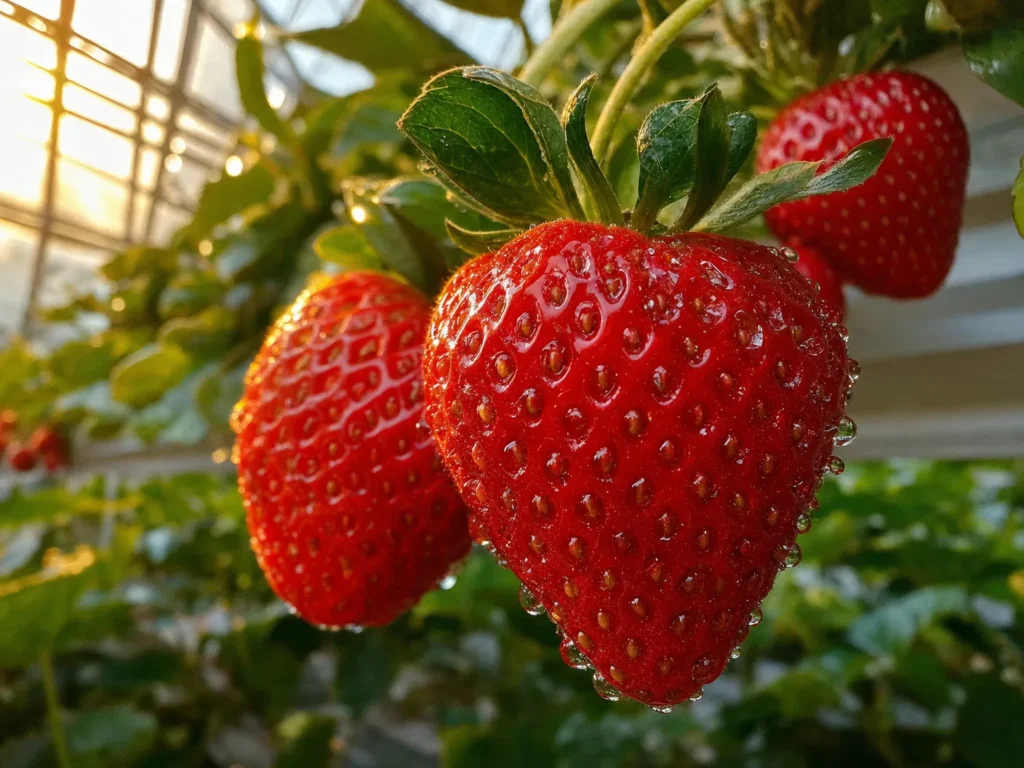
Beautiful geometric structures delivering 24/7 climate control powered entirely by sunshine. From juicy strawberries to the finest vanilla — perfect performance, every season.
George Gensun Glasshouses are not simply structures — they are living, breathing environments engineered to the precise needs of the world’s most discerning growers. Each one is a bespoke masterwork of geometry, glass, and solar technology.
George has been erecting glasshouses and powered growing structures since the 1980s, drawing inspiration from the great glass palaces of Victorian England and the precision horticulture of the Dutch masters. Today, his revolutionary self-powered Glasshouses bring joy — and extraordinary harvests — to the gardens of the world’s finest growers.
YEARS OF EXPERTISE
0+
Erecting glasshouses since the 1980s
CLIMATE CONTROL
0/7
Uninterrupted growing conditions
SOLAR POWERED
0%
Zero grid dependency
BESPOKE DESIGN
0°
Every structure uniquely crafted
01 — HERITAGE
From Crystal Palace to Kew Gardens
INSPIRED BY THE GREAT GLASSHOUSES OF HISTORY
◇
The Crystal Palace, 1851
JOSEPH PAXTON'S MASTERWORK
When Joseph Paxton — a gardener by training — designed the Crystal Palace for the Great Exhibition of 1851, he proved that glass and iron could create spaces of transcendent beauty. At 563 metres long and enclosing 92,000 square metres, it housed living elm trees within its nave. Paxton’s genius lay in understanding that structure and nature were not opposites but partners. George Gensun carries this philosophy forward into the 21st century.
◈
Kew Gardens Palm House
DECIMUS BURTON & RICHARD TURNER, 1848
The Palm House at Kew Gardens remains one of the most important surviving Victorian iron and glass structures in the world. Built to house the Royal Botanic Gardens’ collection of tropical palms, it demonstrated that controlled environments could sustain life from any climate on Earth. Its curved wrought-iron ribs, spanning 30 metres at the widest point, established the template for the grand glasshouse as both scientific instrument and architectural monument.
◉
The Dutch Greenhouse Revolution
WESTLAND, NETHERLANDS — 20TH CENTURY
The Netherlands transformed the science of growing under glass into an industrial art form. In the Westland region, thousands of hectares of sophisticated glasshouses produce tomatoes, peppers, cucumbers, and cut flowers for the entire world — using half the resources of open-field agriculture. Dutch growers pioneered precision climate control, hydroponic nutrition, and spectral lighting management. George Gensun synthesises this technical mastery with the aesthetic ambition of the great Victorian glasshouses.
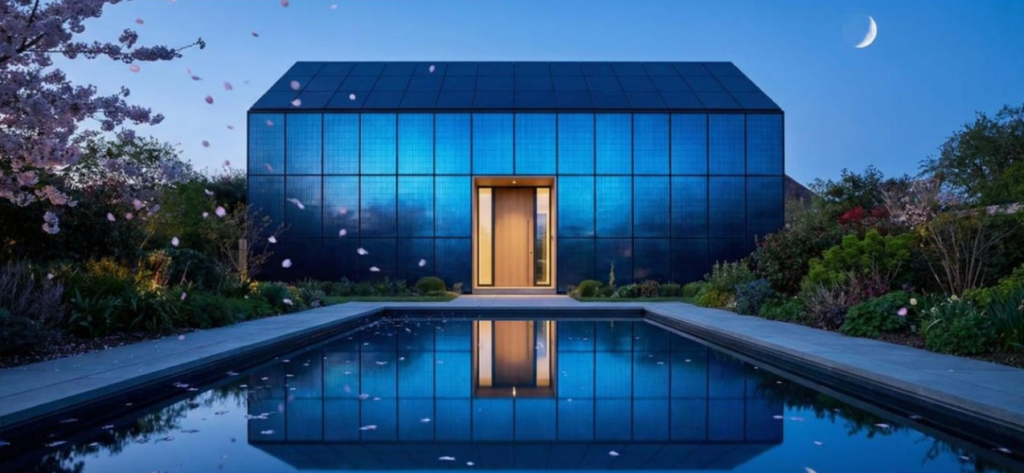
At the heart of every George Gensun Glasshouse is a sophisticated Building-Integrated Photovoltaic (BIPV) system. Transparent and semi-transparent solar glass panels are woven seamlessly into the geometric structure, harvesting energy from every facet of the roof. The panels use advanced organic photovoltaic molecules that absorb ultraviolet and infrared wavelengths — converting invisible light into electricity while transmitting the full visible spectrum to the plants below. Battery storage systems ensure 24/7 operation regardless of cloud cover or season.
The Gensun climate control system maintains optimal growing conditions with surgical precision. Temperature, humidity, CO₂ concentration, and air circulation are continuously monitored and adjusted by an intelligent control system. Geothermal heat exchange, solar-powered ventilation, and precision misting create microclimates that can replicate the conditions of any growing environment on Earth — from the humid tropics required for vanilla orchids to the cool, bright conditions that produce the finest strawberries. The system learns and adapts to seasonal changes, optimising performance year-round.
Light is the engine of all growth. The Gensun Glasshouse system delivers precisely calibrated light spectra through a combination of the structure’s geometric orientation — maximising natural light capture at every hour of the day — and supplementary LED grow-light arrays that can be tuned to specific wavelengths. Red (660nm) and blue (450nm) spectra drive photosynthesis; far-red (730nm) controls flowering and fruiting; UV light enhances flavour compounds and anthocyanins. The result is produce of exceptional quality — deeper flavour, higher nutritional density, and perfect visual appearance.
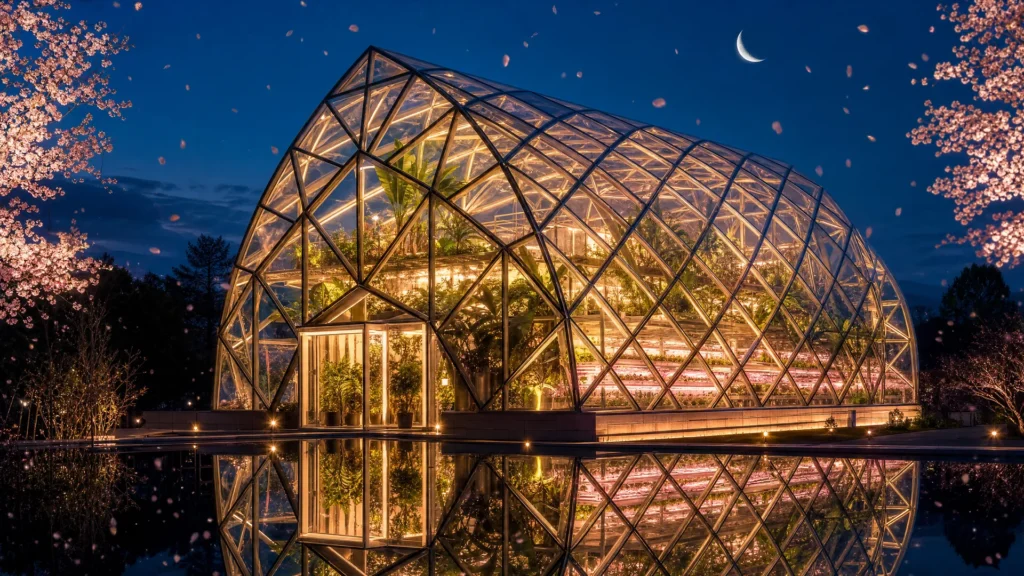
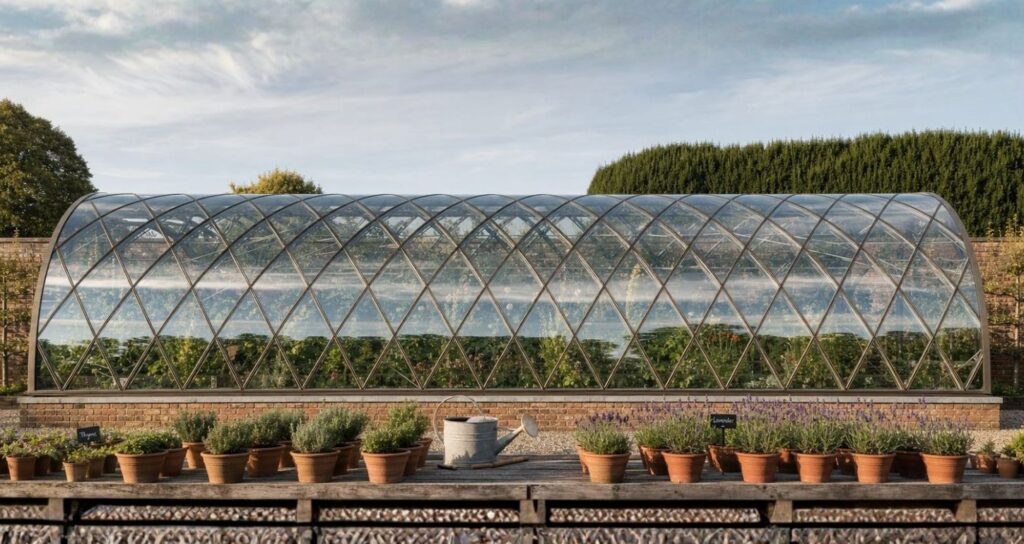
The geometric forms of the Gensun Glasshouse are not merely aesthetic — they are functionally superior. Geodesic and faceted dome structures distribute structural loads with extraordinary efficiency, allowing for minimal framework and maximum glass area. The triangulated geometry creates inherent rigidity that withstands wind loads, snow loads, and thermal expansion without the heavy steel sections required by conventional rectangular structures. Each facet of the glass envelope is precisely angled to maximise solar gain in winter and minimise overheating in summer, working with the sun rather than against it.
STRUCTURE TYPE
Geodesic / Faceted
FRAME MATERIAL
Powder-coated steel
GLASS SPECIFICATION
Toughened BIPV
WIND RATING
Up to 120 km/h
03 — GROWING
From Strawberries to Vanilla
The Gensun Glasshouse is not limited to a single crop. Its precision climate systems can be configured to grow virtually anything — from the most delicate tropical orchid to the most productive commercial vegetable.
FRAGARIA × ANANASSA
Strawberries
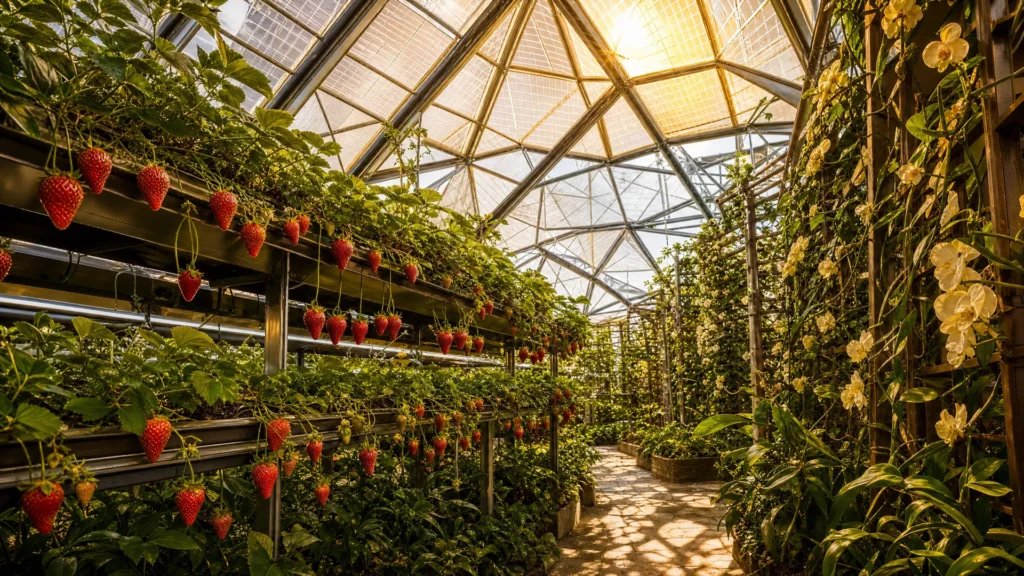
The Gensun Glasshouse creates the perfect conditions for strawberry cultivation: bright, full-spectrum light at 16–18 hours per day, temperatures held at 18–22°C during the day and 12–14°C at night, and humidity maintained at 65–75%. The result is fruit of exceptional sweetness, size, and flavour — available twelve months of the year. Elevated growing channels allow for easy harvesting and prevent soil-borne disease.
TEMPERATURE
TEMPERATURE
18–22°C day / 12–14°C night
HUMIDITY
65–75% RH
LIGHT
16–18 hrs / 600–800 μmol/m²/s
GROWING SYSTEM
Elevated hydroponic channels
VANILLA PLANIFOLIA
Vanilla
Vanilla is one of the most demanding and rewarding crops to cultivate under glass. Native to Mexico, the vanilla orchid requires tropical warmth (25–30°C), high humidity (80–85%), dappled light filtered through the canopy, and — crucially — hand pollination of each individual flower. The Gensun Glasshouse replicates the humid tropical forest floor with precision, allowing vanilla to be grown at any latitude. After three to five years, the climbing vines produce pods of extraordinary aromatic intensity.
OPTIMAL GROWING CONDITIONS
TEMPERATURE
25–30°C constant
HUMIDITY
80–85% RH
LIGHT
Dappled / 200–400 μmol/m²/s
GROWING SYSTEM
Trellis climbing, deep organic medium
MANGIFERA, CARICA, PASSIFLORA
Tropical Fruits
Mangoes, papayas, passion fruit, figs, and citrus — the Gensun Glasshouse brings the world’s most prized tropical fruits to the gardens of northern Europe and beyond. Each crop zone within the glasshouse can be independently climate-controlled, allowing a single structure to host multiple growing environments simultaneously. The geometric design maximises vertical growing space, with climbing and hanging varieties trained along the interior framework.
OPTIMAL GROWING CONDITIONS
TEMPERATURE
22–35°C (crop-specific)
HUMIDITY
60–80% RH
LIGHT
Full spectrum / 800–1200 μmol/m²/s
GROWING SYSTEM
Mixed substrate and hydroponic
SOLANUM, CUCUMIS, CAPSICUM
Premium Vegetables
Following the Dutch model of precision horticulture, the Gensun Glasshouse is equally suited to the production of premium salad crops, heritage tomatoes, cucumbers, peppers, and microgreens. Computer-controlled nutrient delivery systems provide each plant with precisely calibrated mineral nutrition, while CO₂ enrichment to 800–1000 ppm accelerates growth rates by 20–30% compared to ambient conditions. The result is produce of restaurant quality, grown sustainably and entirely on solar power.
OPTIMAL GROWING CONDITIONS
TEMPERATURE
18–26°C (crop-specific)
HUMIDITY
70–80% RH
LIGHT
16 hrs / 400–800 μmol/m²/s
GROWING SYSTEM
NFT / DWC / Substrate
04 — GALLERY
The Gensun Portfolio
EASE-055 — Geometric dome glasshouse, English walled garden
EASE-057 — Solar glass glasshouse at dusk
Gensun Glasshouse at night — 24/7 growing under the stars
Interior growing environment — strawberries and vanilla orchids
05 — BESPOKE DESIGN
Every Glasshouse is a
Unique Masterwork
No two growing requirements are alike. The George Gensun Glasshouse is designed from first principles to meet the precise needs of each client — their site, their crops, their aesthetic vision, and their ambitions. From intimate garden orangeries to large-scale commercial growing facilities, every structure is individually engineered and hand-crafted.
Please contact us to discuss your requirements. We will provide a bespoke design consultation and detailed proposal tailored to your site and growing ambitions.
◇
Site Survey
Full analysis of your location, orientation, and growing requirements
◈
Bespoke Design
Unique architectural design matched to your vision and needs
◉
Full Installation
Complete construction, commissioning, and growing system setup
Each Gensun Glasshouse is a bespoke design, created to meet the precise needs of your growing requirements. We welcome enquiries from private estate owners, commercial growers, botanical gardens, and research institutions worldwide.